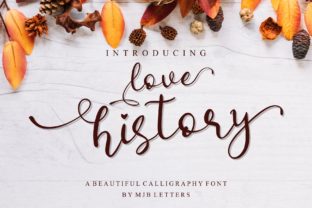
Love History: Elegant Script Handwritten Fonts for Brand Identity
As a small business owner, I have learned that first impressions are everything, and the right typography can make or break your brand’s perceived value. Love History is an elegant font designed to bring a touch of sophistication and authenticity to your visual identity. In a market saturated with generic templates, choosing a distinctive typeface like this can help your business stand out while maintaining a professional demeanor. This script handwritten style offers an original handwritten look that feels personal yet polished, allowing entrepreneurs to give a natural impression to their designs without sacrificing readability or structure.
Why Love History Elevates Logo Design and Business Cards
When you are building a brand from the ground up, your logo needs to communicate your personality instantly. The Love History font provides a unique character that stands out in crowded digital feeds and physical spaces alike. Because it has an original handwritten look, it avoids the sterile feel of many standard serif or sans-serif options, offering instead a warm, inviting aesthetic that resonates with modern consumers who value authenticity. For business cards, using this elegant font as the primary typeface signals attention to detail and care, qualities that clients associate with high-quality service.
I recommend using this typeface for logos where the name is short and memorable. The curves and flow of the letters create a cohesive shape that works well as a standalone icon or paired with a simpler secondary font. When designing business cards, consider using the script for the business name and a clean, minimal sans-serif font for contact details. This contrast ensures that your essential information remains legible while the brand name retains its artistic flair. By combining these elements, you create a tangible piece of marketing collateral that feels both premium and approachable.
Enhancing Packaging Design and Product Labels with Natural Typography
For handmade product sellers, boutique owners, and online retailers, packaging is often the first physical interaction a customer has with your brand. The Love History font can transform simple boxes, jars, or bags into branded experiences. Its elegant nature makes it particularly suitable for products in the beauty, wellness, food, and lifestyle sectors. Whether you are labeling artisanal candles, organic skincare, or gourmet treats, this script adds a layer of perceived value that justifies premium pricing.
The key to successful packaging design lies in balance. While the font gives a natural impression to your designs, it should be used strategically to avoid overwhelming the viewer. I suggest using it for the product name or a key tagline, such as "Handcrafted" or "Organic," to reinforce your brand story. Ensure that regulatory information, ingredients, and usage instructions are set in a highly readable, neutral font. This hierarchy guides the customer’s eye to the most important branding elements first. Furthermore, because the font has an elegant profile, it pairs beautifully with minimalist packaging materials like kraft paper, matte black boxes, or clear glass, allowing the typography to shine without competing with busy graphics.
Building Trust Through Consistent Social Media Graphics
In the digital realm, consistency is the cornerstone of trust. Your Instagram posts, Pinterest pins, and Facebook ads need to look like they belong to the same family. Using a consistent font across all these platforms helps build recognition. The Love History font serves as an excellent anchor for social media content, providing a signature style that followers will come to recognize. It works exceptionally well for quote graphics, promotional announcements, and event invitations.
However, readability on mobile screens is critical. Large blocks of text in a script font can be difficult to read on small devices. Therefore, I advise using this font primarily for headlines, captions, or short phrases. For longer descriptions or calls to action, pair it with a clean, geometric sans-serif font. This combination allows you to maintain the elegance of the script while ensuring that your message is clear and actionable. When creating flyers or digital advertisements, use the font to highlight special offers or new arrivals. The natural impression it gives helps soften the sales pitch, making your promotions feel more like helpful suggestions than aggressive marketing tactics.
Practical Applications for Photography and Creative Portfolios
If you are a photographer, artist, or creative service provider, your work speaks for itself, but your presentation needs to frame that work effectively. The Love History font complements visual-heavy portfolios by adding a subtle layer of sophistication without distracting from the images. It can be used for watermarks, photo albums, and client galleries to add a personal touch that feels curated and exclusive.
For photography businesses, using this elegant font on contact sheets or final delivery packages creates a memorable unboxing experience, even if it is digital. It suggests that the client is receiving something special, not just a file transfer. Similarly, for brochure design, whether print or digital, this font can serve as the header for section titles, guiding the reader through your services with grace. The versatility of these fonts allows them to adapt to various layouts, making them a valuable asset for any creative entrepreneur looking to refine their visual communication.
Font Pairing Strategies for Professional Brand Identity
To get the most out of Love History, understanding how to pair it with other typefaces is essential. A common mistake small business owners make is using too many decorative fonts, which can make a brand look chaotic. Instead, adopt a rule of two: one expressive display font and one neutral supporting font. Since Love History is a script handwritten style, it naturally pairs well with clean, modern sans-serifs or classic serifs.
For example, pairing it with a lightweight sans-serif like Helvetica Neue or Lato creates a contemporary, airy feel perfect for tech startups or modern boutiques. Pairing it with a traditional serif like Garamond or Baskerville evokes heritage, luxury, and timelessness, ideal for law firms, wineries, or high-end consulting. When testing these combinations, always check for contrast in weight and style. The goal is to create a visual harmony where the script draws attention and the supporting font provides clarity. This strategic approach ensures that your brand identity remains cohesive across all touchpoints, from your website footer to your email signatures.
Ensuring Commercial Viability and Licensing Compliance
Before deploying Love History across your entire brand ecosystem, it is crucial to address licensing. As a business owner, you must ensure that you have the appropriate commercial license to use the font for logos, merchandise, packaging, and digital products. Personal licenses typically do not cover commercial use, and violating these terms can lead to costly legal issues. Always review the specific terms provided by the font creator or distributor. If you plan to use the font on products that will be sold, such as t-shirts, mugs, or printed stationery, you may need an extended license or a multi-seat license depending on your team size.
Investing in proper licensing protects your business and shows respect for the designer’s work. It also gives you peace of mind, allowing you to focus on growing your brand without worrying about intellectual property disputes. By treating your typography choices with the same seriousness as your financial planning, you demonstrate professionalism and integrity. Ultimately, using a high-quality, properly licensed font like Love History is an investment in your brand’s long-term credibility and success.